
Table of Contents
Search Engine Optimisation (SEO) isn’t what it used to be. Gone are the days when keyword stuffing, exact-match domains, and backlink volume alone could get your site to the top of Google. In 2025, SEO has evolved into something more innovative, deeper, and more user-focused. You could harm your rankings without realising it if you’re still using outdated tactics.
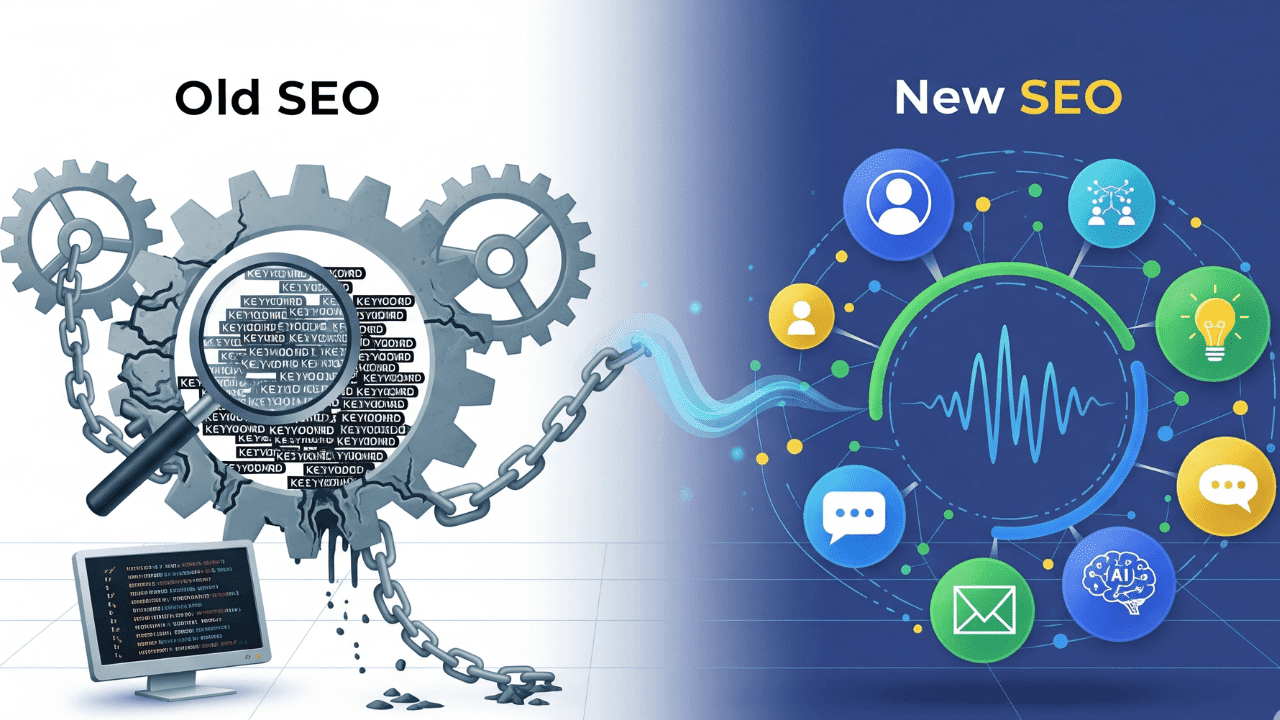
In this guide, we break down Old SEO vs New SEO, showing how the landscape has changed, what Google now rewards, and how you can align your strategy for long-term success.The discussion around old seo vs new seo is crucial for understanding the evolving landscape of digital marketing.
When comparing old seo vs new seo, it’s important to recognize the implications of these changes on your strategy.In the realm of old seo vs new seo, understanding the user’s intent is vital.Thus, the shift from old seo vs new seo emphasizes quality over quantity.
1. Keyword Stuffing vs Intent-Based, Human-Centric Content
Old SEO: The goal was to use your keyword everywhere: H1, H2, H3, meta tags, alt text, and throughout the content. Writers often repeated terms like “best wireless headphones” excessively, making content sound robotic.
New SEO: Search engines now reward content written for humans. You must match the searcher’s intent, cover relevant subtopics, and write in natural language. Modern algorithms use NLP (natural language processing) to understand context, meaning synonyms and related phrases matter more than repeating a single keyword.
Tips:
- Write with your audience in mind.
- Address questions and concerns.
- Use tools like Google’s “People Also Ask” or Reddit threads to find real user queries.
- Structure your content with clear headings and summaries.
By aligning your content with what users want to know, you boost engagement and time on page, both critical SEO signals.It’s a major transition when looking at old seo vs new seo and the strategies involved.
To fully grasp the changes, we must analyze old seo vs new seo throughout this guide.As we delve into the specifics of old seo vs new seo, clarity becomes key.Understanding the evolution from old seo vs new seo can help you stay ahead.
2. Thin Affiliate Sites vs Authority Hubs with Schema & Layered Content
Old SEO: Thin sites with a handful of product reviews or affiliate pages used to rank easily, especially if they had an exact-match domain. They offered little value, were barely updated, and often duplicated content from elsewhere.
New SEO: Today, Google favours topical authority. That means creating an Authority Hub, a well-structured site with pillar content supported by cluster articles that cover every subtopic in depth.
Authority Hub Elements:
- Pillar Pages: High-level overviews targeting broad keywords.
- Cluster Pages: In-depth content covering specific aspects of the pillar topic.
- Schema Markup: Use structured data like FAQ, Article, and Product schema to improve visibility in rich snippets.
- AI-Friendly Formatting: Use subheadings, bullet points, and plain language to make your content easy for search engines and AI tools to parse.
Creating a layered and well-linked structure increases your chances of ranking across multiple related queries and appearing in AI-powered search summaries.
3. One-Off Blog Posts vs Comprehensive Topic Mapping (Knowledge Graph SEO)
Old SEO: Many websites produced random, one-off blog posts based on keyword lists without a coherent strategy. This scattered approach left content gaps, making the site look incomplete.
In short, the transition from old seo vs new seo is more than just a trend.Key differences between old seo vs new seo will shape your approach moving forward.
New SEO: Map your content like a Knowledge Graph. Identify all key entities and subtopics in your niche and create content for each. Think like Google: cover every angle of a topic to demonstrate authority.
How to Implement:
- Mind Map Your Niche: Include all subtopics, user questions, comparisons, how-tos, etc.
- Create Interlinking: Use contextual links between all related articles.
- Avoid Overlap: Make sure every piece of content has a unique focus.
- Diversify Formats: Add videos, infographics, calculators, or other interactive content where suitable.
This strategy improves SEO and enhances UX by making your site the go-to resource.
4. Over-Optimised Anchor Text vs Natural, Varied Anchor Text
Old SEO: SEOs tried to use exact-match anchor text (e.g., “best budget laptop”) in every backlink, which made link profiles look unnatural and easily triggered spam filters.
New SEO: Focus on anchor text diversity. Use a mix of branded, generic, partial-match, and URL-based anchors. Modern link-building prioritises quality over quantity and relevance over keyword exactness.
This is the time to embrace changes in old seo vs new seo.
Best Practices:
- Use natural, in-context anchor text.
- Link from relevant sites or articles.
- Avoid repetition of the same keyword anchor.
- Include brand mentions and URL anchors.
A natural backlink profile signals authenticity and reduces the risk of penalties.
5. Exact-Match Domains vs Building a Recognisable Brand
Old SEO: Domains like “bestlaptopscheap.com” were popular because they gave an instant keyword boost. However, they lacked trust and long-term branding potential.
New SEO: Branding is everything. A memorable, trustworthy brand encourages repeat visitors, earns branded searches, and builds credibility in human and AI-driven searches.
Branding Tips:
- Choose a unique, relevant, and memorable domain.
- Use consistent visual branding and tone of voice.
- Increase branded search volume through social media, podcasts, or PR.
- Add Organisation Schema to signal your brand as a known entity.
Brands earn trust, loyalty, and rankings. Exact-match domains no longer offer a lasting advantage.
6. Backlink Counts vs AI Citations and Content Authority
Old SEO: SEOs measured success by the number of backlinks. More links meant more authority, regardless of relevance or quality.
New SEO: Google’s Search Generative Experience (SGE) and other AI tools now prioritise citations in AI-generated answers. When Google’s AI Overview or Bing Chat references your content, search engines treat it as a trusted and definitive source.
How to Earn AI Citations:
- Write explicit, well-structured content that answers specific questions.
- Use lists, definitions, and summaries to help AI pull snippets.
- Add FAQ Schema and headings that match common queries.
- Monitor tools like Google Search Console for AI citation insights.
Being featured in an AI overview is the new “Position Zero.” It brings visibility, authority, and long-term SEO value.
Key Takeaways: Old SEO vs New SEO
| Old SEO | New SEO |
| Keyword stuffing | Intent-driven content |
| Thin affiliate sites | Authority hubs with schema |
| One-off posts | Knowledge-graph topical coverage |
| Exact-match anchor text | Varied, contextual anchor text |
| Exact-match domains | Branded domain & entity recognition |
| Backlink quantity | AI citations and platform mentions |
SEO in 2025 is about earning trust, serving users, and building a lasting brand. It rewards those who go beyond outdated tricks and shortcuts. Whether you’re an in-house marketer or an agency specialist, transitioning from old SEO habits to modern best practices is essential.
The bottom line: Focus on the human behind the search and the quality of your content. If your site becomes the most helpful, comprehensive, and trusted resource in your space, both search engines and users will reward you.
Let an Expert Help You Make the Shift to Modern SEO
The shift from old SEO to new SEO is not just about better rankings. It’s about building a sustainable digital presence that continues to drive traffic and trust. It leads in a constantly evolving online world.
You don’t have to navigate this alone. Whether you’re stuck in outdated tactics or want to ensure your current strategy aligns with the latest algorithm updates, having an expert by your side can make all the difference.
Work With a Digital Team That Understands What Works in 2025
At Genghis Digital, we don’t just follow SEO trends, we help define them. Our team combines deep SEO expertise with cutting-edge digital strategy to deliver real, measurable results for businesses across Australia.
Whether you need:
- A complete SEO audit to spot gaps and opportunities
- A content strategy that aligns with Google’s Helpful Content standards
- High-performing websites that convert and rank
- Or a complete SEO campaign that covers technical, content, and authority-building
We’ve got you covered.
Ready to leave old SEO behind? Let’s build a strategy that earns rankings, not just chases them. Book your free SEO consultation today with Genghis Digital and take the first step toward smarter search visibility.